
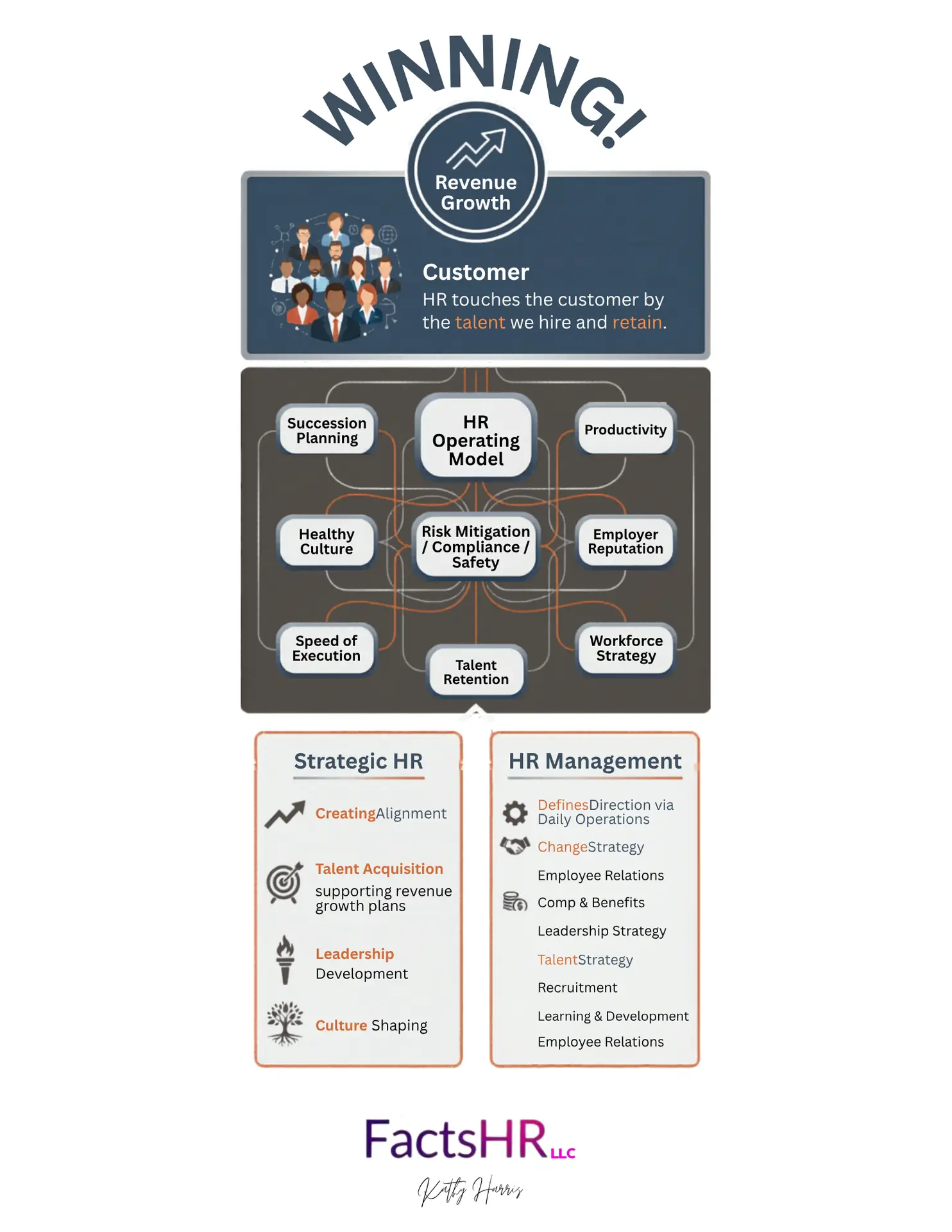
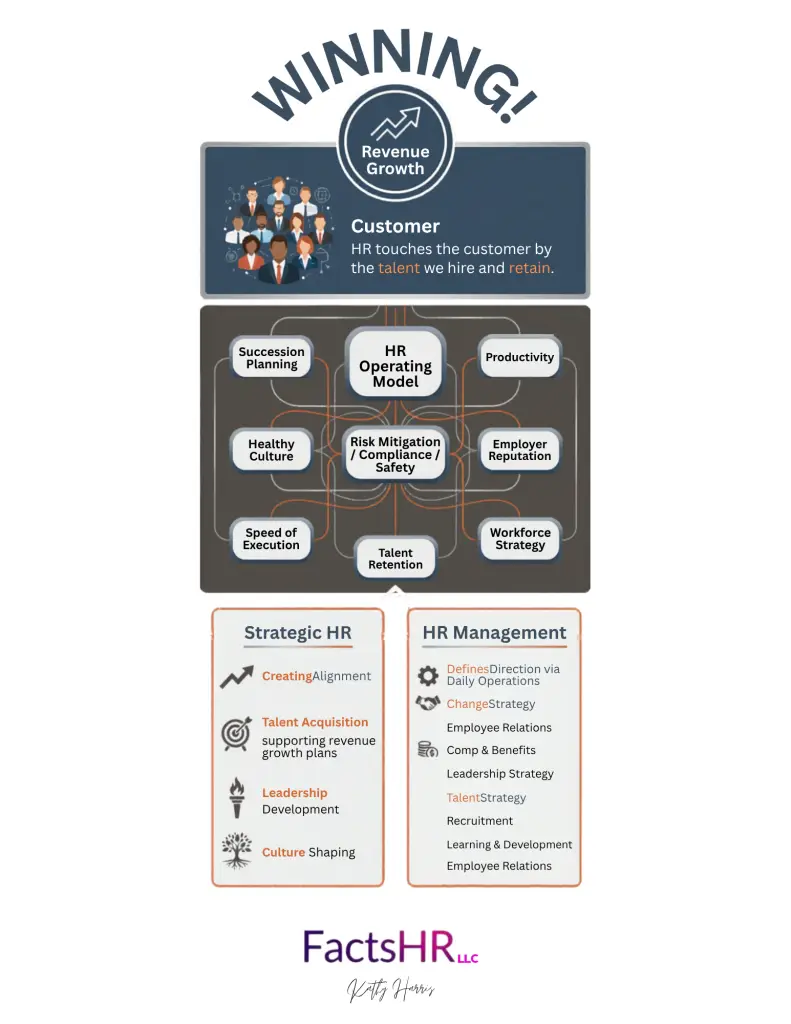
Keep it simple. When HR works well, it affects revenue, expenses, and customer outcomes. It’s about profitability and operations. Think of HR as the bridge between a company’s capabilities and how customers experience your product or service — with revenue growth sitting at the top of that chain. Hire and keep the right people. Miss that, and no amount of sales hustle will fix it.
Everyone loves a strategic plan, but strategy means nothing without the daily work that makes it real. Practical HR — hiring, onboarding, performance management, compliance, and workforce planning, is where the rubber meets the road. It’s the stuff that makes teams deliver.
- Revenue Link: Quality talent and retention enhance customer experience
- Cost Control: Inefficient staffing and redundant roles drain profits.
- Risk Mitigation: Strong HR processes prevent costly legal expenses
- Productivity and Agility: Effective HR promotes upskilling and workforce flexibility
Practical HR in Action
- Hiring: Use skills-based hiring and realistic job previews so you get the right people faster. That lowers recruiting costs and shortens time-to-productivity.
- Onboarding & development: A smooth start and ongoing learning reduce early turnover and make employees more productive sooner.
- Performance & headcount management: Clear expectations, timely feedback, and removing redundancies keep payroll efficient and boost output per employee.
- Compliance & documentation: Clear policies, consistent processes, and accurate records minimize legal exposure and reduce the chance of expensive claims.
Measure time-to-productivity, retention of high-performers, cost-per-hire, payroll as a percentage of revenue, lawsuit and compliance incident costs, and customer satisfaction tied to employee performance.
Bottom line, HR is a profit enabler and a risk mitigator. Practical HR turns strategy into results: better hires, lower risk, smarter payroll, and happier customers — all of which drive revenue and protect profits. §





One Response
Good post. Very true. Some of the same components as Best Buy’s quite successful holistic “Renew Blue” strategy that started in 2012 with the new CEO Hubert Joly.
At Best Buy, they saw annualized cost reductions of $1 Billion by 2015, had better customer experiences seen in higher Net Promoter Score, had better paid and trained employees, and the stock price went from under $15 in 2012 to $40-50 range by 2017 at the end of the initial Renew Blue phase.
Best Buy’s investment was about “Unleashing Human Magic” as Joly referred to it.
Speaking more specifically to the things this post mentions, a well running HR definitely can be felt internally and externally for a company.