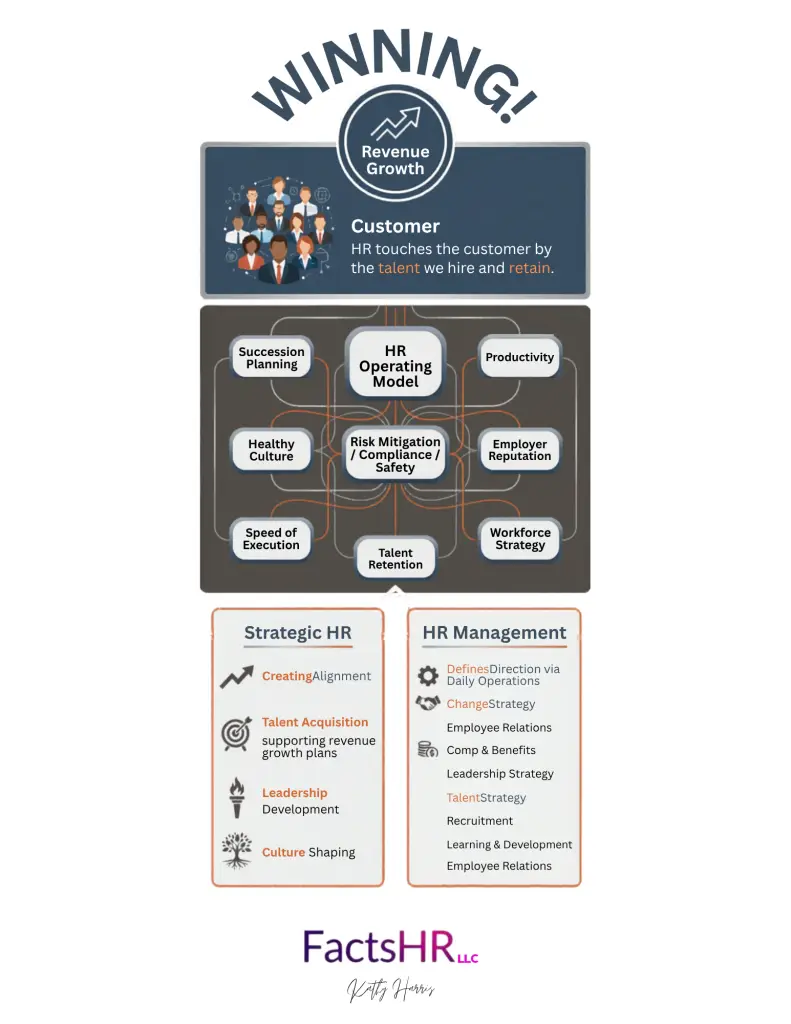
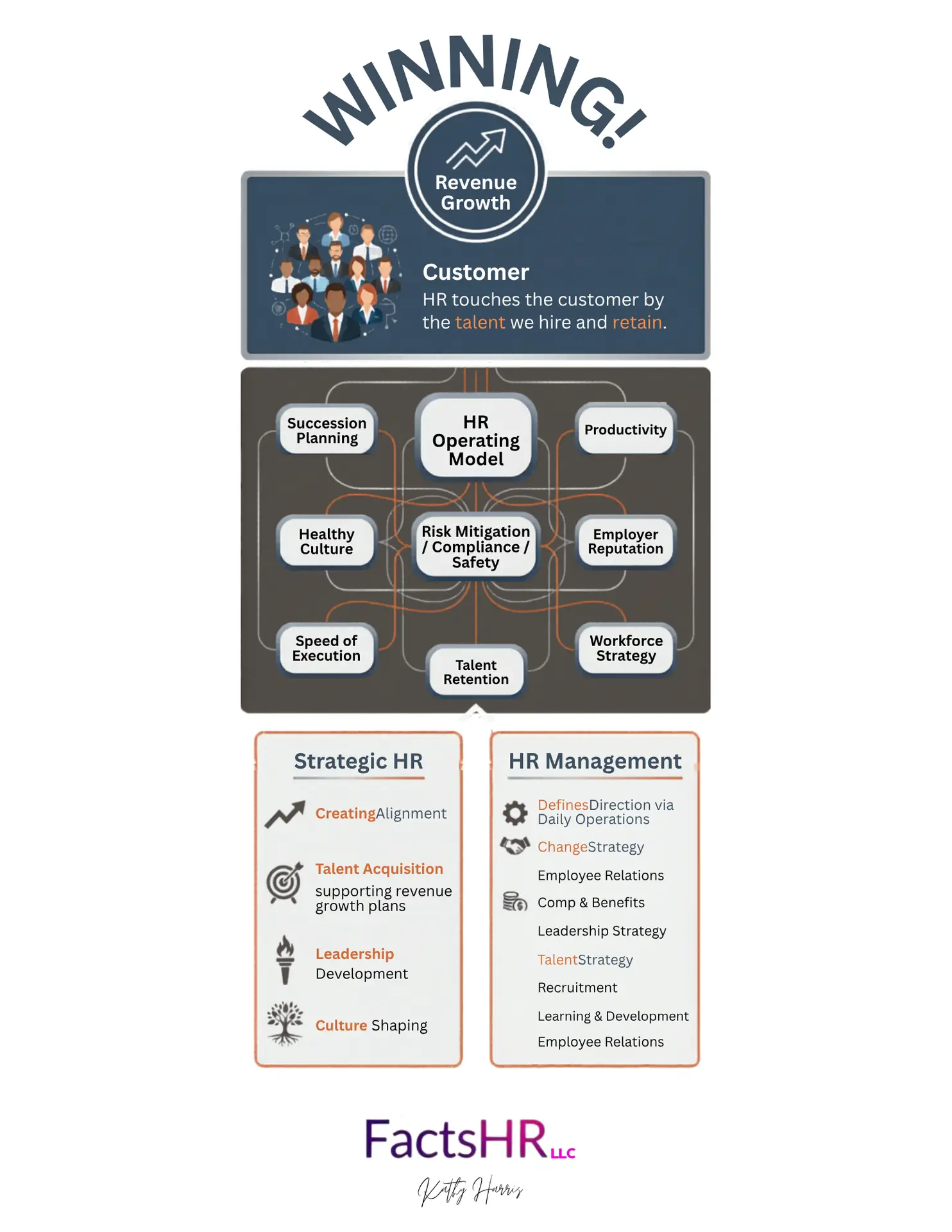
Keep it simple. When HR works well, it affects revenue, expenses, and customer outcomes. It’s about profitability and operations. Think of HR as the bridge between a company’s capabilities and how customers experience your product or service — with revenue growth sitting at the top of that chain. Hire and keep the right people. Miss that, and no amount of sales hustle will fix it.
Everyone loves a strategic plan, but strategy means nothing without the daily work that makes it real. Practical HR — hiring, onboarding, performance management, compliance, and workforce planning, is where the rubber meets the road. It’s the stuff that makes teams deliver.
- Revenue Link: Quality talent and retention enhance customer experience
- Cost Control: Inefficient staffing and redundant roles drain profits.
- Risk Mitigation: Strong HR processes prevent costly legal expenses
- Productivity and Agility: Effective HR promotes upskilling and workforce flexibility
Practical HR in Action
- Hiring: Use skills-based hiring and realistic job previews so you get the right people faster. That lowers recruiting costs and shortens time-to-productivity.
- Onboarding & development: A smooth start and ongoing learning reduce early turnover and make employees more productive sooner.
- Performance & headcount management: Clear expectations, timely feedback, and removing redundancies keep payroll efficient and boost output per employee.
- Compliance & documentation: Clear policies, consistent processes, and accurate records minimize legal exposure and reduce the chance of expensive claims.
Measure time-to-productivity, retention of high-performers, cost-per-hire, payroll as a percentage of revenue, lawsuit and compliance incident costs, and customer satisfaction tied to employee performance.
Bottom line, HR is a profit enabler and a risk mitigator. Practical HR turns strategy into results: better hires, lower risk, smarter payroll, and happier customers — all of which drive revenue and protect profits. §